Language Learning Videos: How to Explain Grammar
Make short language learning videos that explain grammar and vocabulary: one pattern, the right narration language, contrast pairs. Ser vs estar example inside.
To explain grammar in a video, teach one pattern, show it in three to five short example sentences, put it next to the mistake learners actually make, and end with a quick check. Narrate in the learner's own language for beginners and in the target language once they can follow it. Keep it under three minutes, because the best language learning videos are the ones people replay on the bus.
That covers most of it. Below are the decisions that make a grammar explanation video work, how to handle vocabulary, and a worked example on Spanish *ser* and *estar*, checked line by line, with an outline and prompt to copy.
One pattern per video
Textbook chapters bundle things together: the present tense, three irregular verbs and the vocabulary for the family, all on four pages. A video should split them apart. One pattern, one video.
Good single-pattern topics:
- Spanish *ser* vs *estar*
- English present perfect vs past simple ("I've lost my keys" vs "I lost my keys yesterday")
- French *tu* vs *vous*
- German word order after *weil*
- Ten words for things in a kitchen
If your title needs "and", it is probably two videos. Short videos are also easier to find again: a learner who forgot *ser* and *estar* wants that video, not minute fourteen of "Spanish verbs, part 2".
Choose the narration language on purpose
This is the biggest decision, and it depends on level.
- Beginners (roughly A1 to A2): explain in the learner's language and give the examples in the target language. A grammar explanation in a language they cannot follow yet teaches nothing except frustration.
- Intermediate and up (B1 and above): narrate in the target language with simple words and short sentences. The video then does two jobs: it teaches the point and gives listening practice.
- Vocabulary for any level: the target language can work early, because the picture carries the meaning. A drawn apple next to the word *manzana* needs no translation.
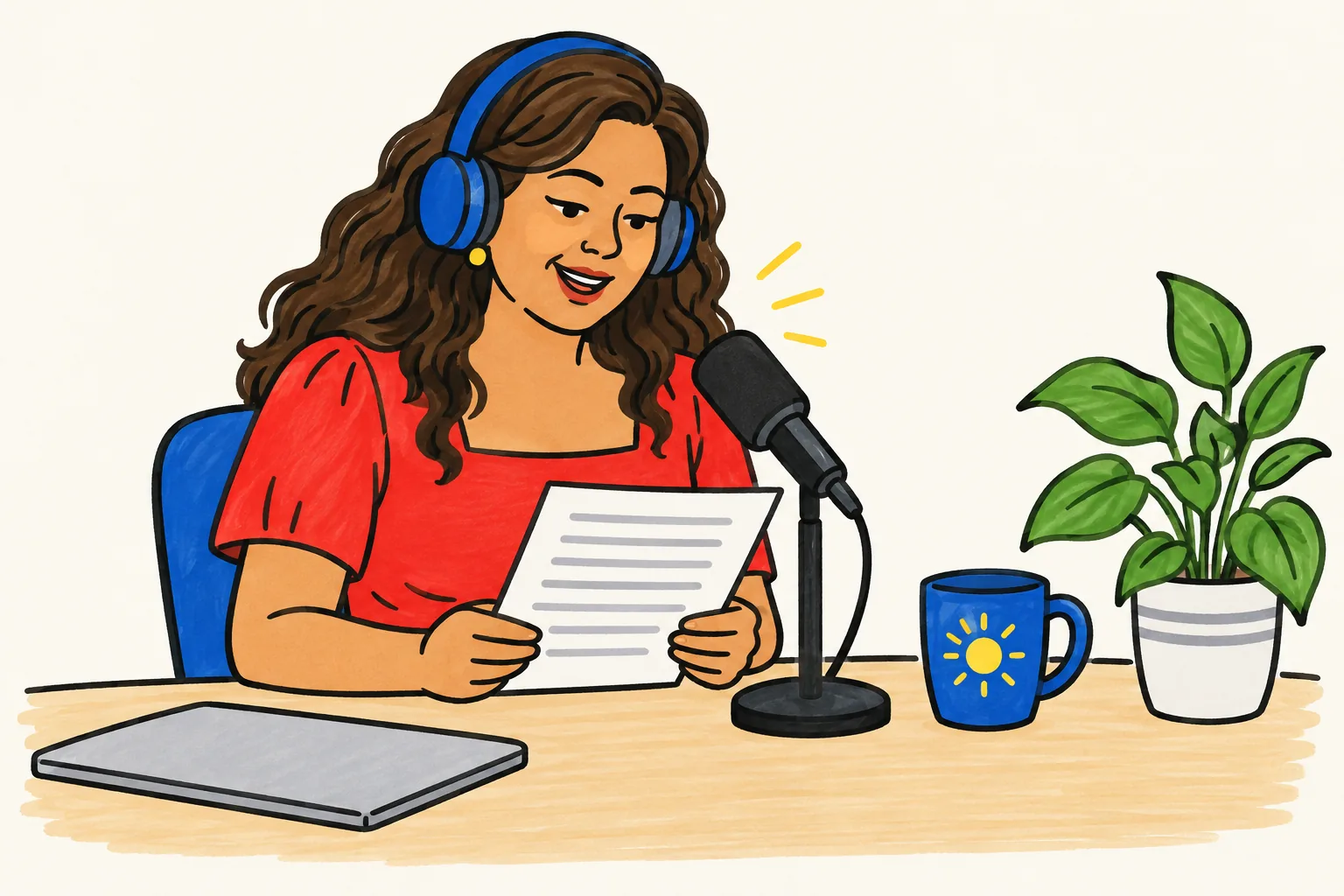
If you mix languages in one narration, listen closely to how the example sentences are pronounced. A voice speaking English may say Spanish words with an English accent, which teaches the wrong sound. When that happens, either record the examples yourself or make a version narrated fully in the target language.
Let pictures carry meaning
For vocabulary, a drawing beats a translation. It links the word to the thing, not to another word, and it works for learners from any first language.
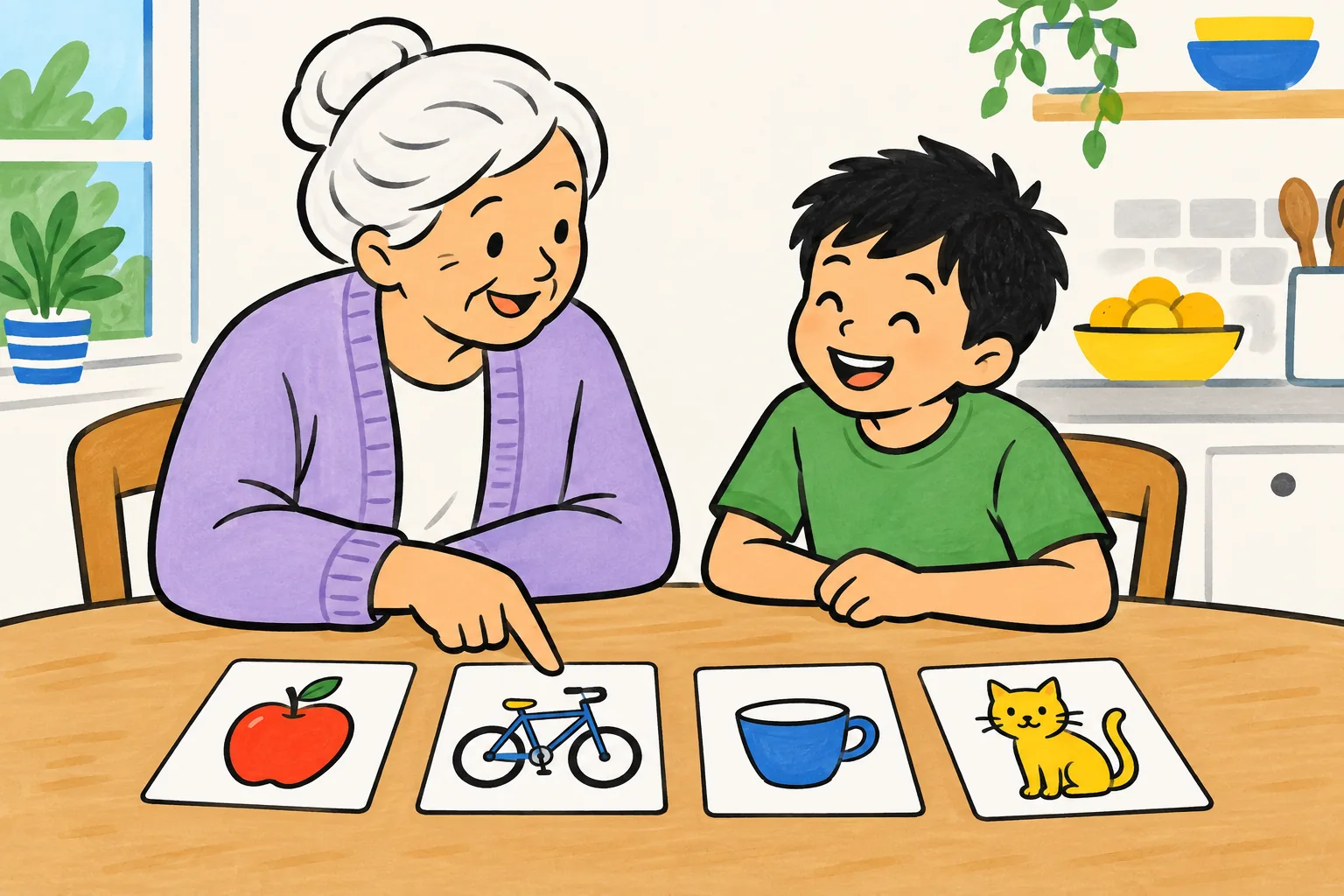
A few rules for vocabulary videos:
- Six to eight words a video, grouped by a theme the learner meets in real life: the kitchen, the bus, the doctor's.
- One word, one drawing. Show the drawing as the word is said, then use it once in a short sentence.
- Verbs as actions. Draw someone running, not the word "run" in a box.
- Gender and articles with the noun. Teach *la manzana*, not *manzana*, so the article sticks from the start.
Let the example sentences do the teaching
Learners remember examples, not rules. A rule tells them what to do; a good example shows them, and they can reuse it word for word.
- Short and reusable. "Estoy cansado" is useful tomorrow. A sentence about a rare bird is not.
- Contrast pairs. Put two sentences side by side that differ in exactly one place: *es aburrido* and *está aburrido*.
- Same people throughout. Use one or two names across all the examples, so learners follow the grammar rather than new characters.
- Name the mistake. Say the error learners really make, say why it is wrong, and give the correct version straight after.
Keep it slow, short and checkable
Speak more slowly than you would to a native speaker, and leave short pauses after each example. One to three minutes is plenty for one pattern. End with two or three gap-fill questions the learner can answer out loud before the next video.
Before you share, have the script checked by a fluent speaker or a colleague who teaches the language. This matters even more if an AI tool drafted the explanation: language models often repeat oversimplified rules, such as "*ser* is permanent, *estar* is temporary", that break on common sentences.
Worked example: ser vs estar in Spanish
Audience: English-speaking adults at A2 level. Narration: English, with the Spanish examples spoken in Spanish. Length: three minutes.
The rule, checked before writing:
- *Ser* says what something is: identity, origin, job, character, time and date, and where an event takes place. *Soy Ana. Somos de México. Es médica. Son las tres. La fiesta es en mi casa.*
- *Estar* says where something is and how it is right now: location, states and conditions, and actions in progress. *Estoy en casa. La sopa está fría. Estamos cansados. Está lloviendo.*
- Some adjectives change meaning. *Es aburrido* means "he is boring"; *está aburrido* means "he is bored". *Es listo* means "he is clever"; *está listo* means "he is ready".
- Why "permanent vs temporary" misleads: death uses *estar* (*está muerto*), a temporary job still uses *ser* (*soy estudiante*), and the place of an event uses *ser* (*la fiesta es en mi casa*).
Outline you can copy:
- Hook. English has one verb "to be". Spanish has two. Pick the wrong one, and "I'm bored" becomes "I'm boring": *estoy aburrido* versus *soy aburrido*.
- *Ser* is what something is. Who you are, where you are from, your job. *Soy Ana. Soy de México. Soy médica.*
- *Ser* for time and events. *Son las tres. La fiesta es en mi casa.*
- *Estar* is where and how, right now. *Estoy en casa. Estoy cansada. La sopa está fría.*
- Same word, new meaning. *Es aburrido* and *está aburrido*. *Es listo* and *está listo*.
- The rule to drop. "Permanent or temporary" sounds neat, but *está muerto* and *soy estudiante* break it. Ask instead: is this what it is, or where and how it is?
- Recap. *Ser*: what something is. *Estar*: where it is and how it is.
- Your turn. Complete: *Mi hermana ___ profesora. El café ___ frío. La reunión ___ a las diez.* (Answers: *es*, *está*, *es*.)
Prompt you can copy:
Make a 3-minute grammar explanation video for English-speaking adults learning Spanish at A2 level. Topic: when to use ser and when to use estar. Narrate in English, with short Spanish example sentences. Teach ser as "what something is" (identity, origin, job, time, where an event happens) and estar as "where and how it is right now". Show the pairs es aburrido / está aburrido and es listo / está listo. Explain why "permanent vs temporary" is misleading, using está muerto and soy estudiante. End with three gap-fill sentences and their answers.
For B1 learners, change the second line to "Narrate in simple Spanish, in short sentences" and keep the rest. That version doubles as listening practice.
Making language videos with KolaVid
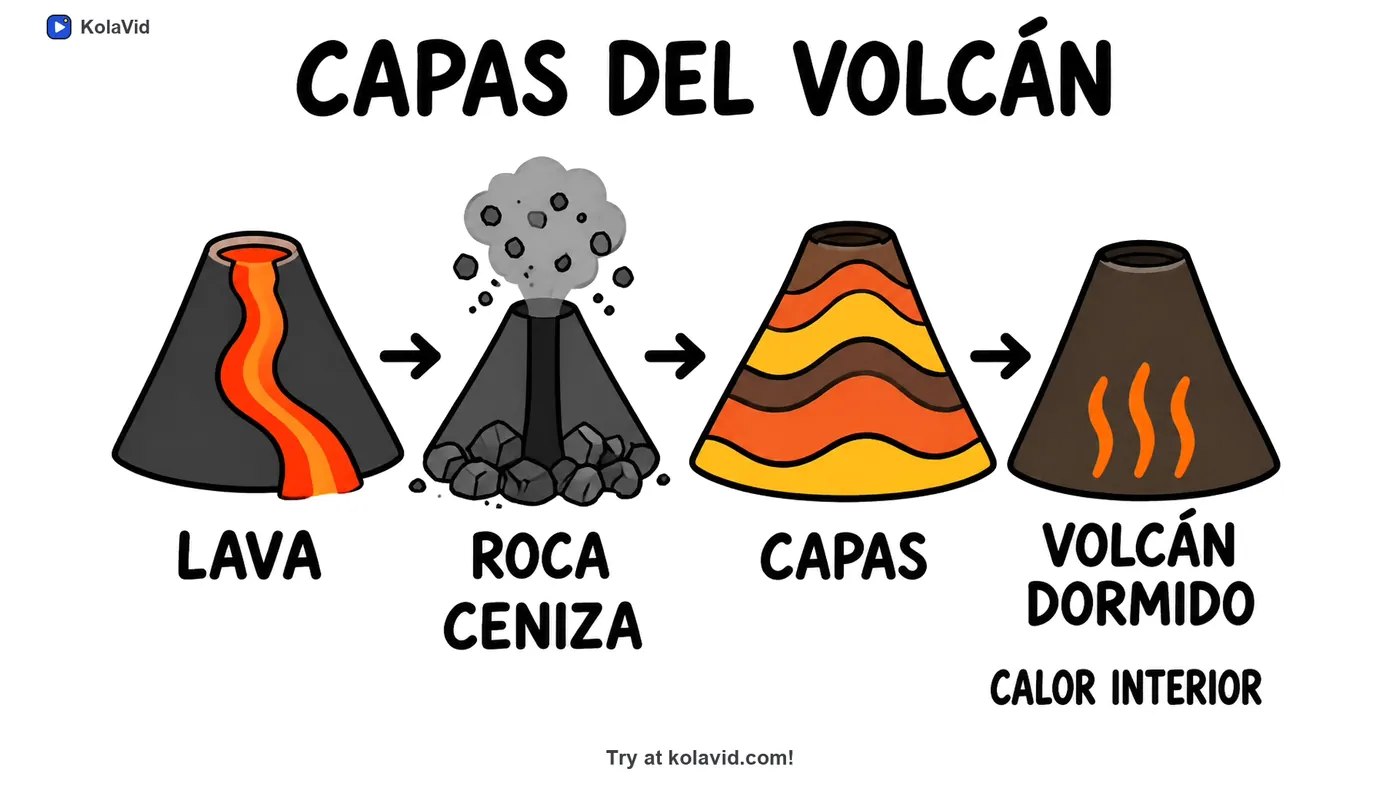
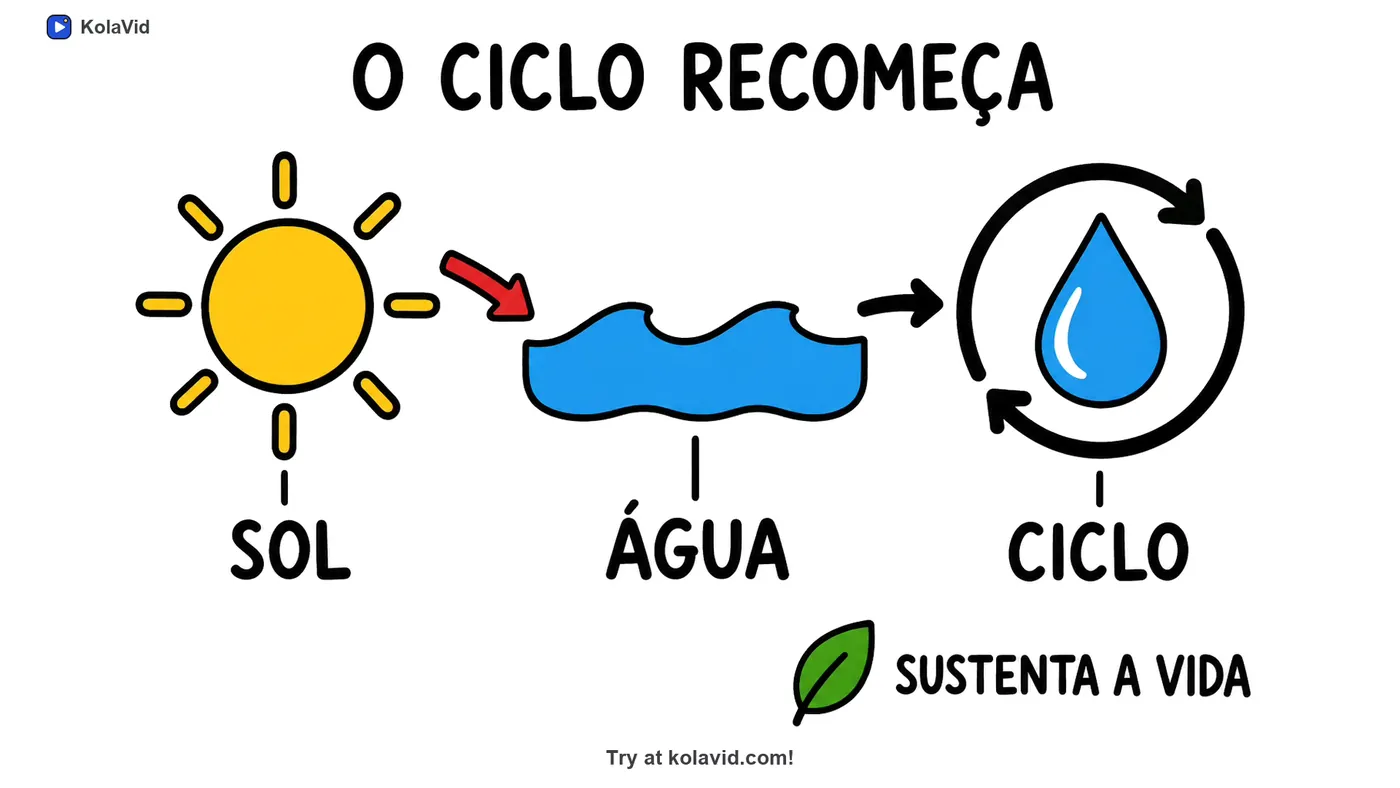
KolaVid turns a typed prompt, pasted text or script, a PDF, Word or PowerPoint file, or a web link into a narrated whiteboard video, with each drawing appearing as the narrator says it. The narration language list includes Spanish and Portuguese among many others, and you can choose a female or male voice. The app itself is in English.
Here is a board from a sample lesson narrated in Spanish, on how a volcano erupts:
And one from a lesson narrated in Portuguese, on the water cycle:
Paste the prompt above, choose the Hand-drawn style, a length and the narration language, and pick a frame: Wide 16:9 for class, Tall 9:16 for learners' phones. Free videos run up to 2 minutes, so for a free version shorten steps 3 and 5. Whiteboard videos come with captions in the narration language, which learners turn on with CC or you download as .srt or .vtt; check them before class. One honest limit for language teachers: there is no editing timeline, so to change a line you edit the prompt or script and make it again. Download the MP4 or share a link. The teachers page has more sample lessons, and the students page shows how learners turn their own notes into study videos.
FAQ
Should grammar videos be in the target language?
For beginners, explain in their language and give examples in the target language. From about B1, narrate in the target language with simple words. Many teachers make both versions of the same video for mixed classes.
How long should a language learning video be?
One to three minutes for one grammar point or six to eight words. Learners replay short videos; they rarely replay long ones.
Can I make vocabulary videos for young children?
Yes. Keep to five or six words, draw each one clearly, and use the target language with very short sentences. Our guide to videos for young learners covers pacing for that age.
Can AI explain grammar correctly?
Often, but not always. AI drafts tend to repeat textbook shortcuts that break on real sentences. Have a fluent speaker check every rule and example before learners see it.
Start with the mistake your learners make most
Pick the error you correct most often in class, write three contrast pairs that show it, and make one short video around them. A free KolaVid account includes one 2-minute video with no card needed. If you already have the explanation written, our script-to-video guide shows how to turn it into a video without rewriting it.