How to Make a Book Summary Video (With an Example)
How to make a book summary video: choose the key ideas, structure the script, stay in your own words with short quotes only, plus a worked Frankenstein outline.
To make a book summary video, decide the one question your video answers about the book, choose three to five key ideas (or turning points, for fiction), and explain them in your own words in a script of two to five minutes. Open with the question, give a one-sentence summary, take the ideas in order with one example each, and close with why the book matters. Keep quotes short and few: the video should explain the book, not read it out.
Below: how to pick the ideas, a structure you can reuse, how to stay on the right side of the author's copyright, and a full worked outline for a public-domain classic, Mary Shelley's *Frankenstein*.
Three reasons people make book summary videos
The method is the same, but the goal changes what you include.
| Who | Goal | What to emphasise |
|---|---|---|
| Student | Show you understood the book, for an assignment or revision | Your reading of the themes, backed by specific moments; check what your teacher allows |
| Teacher | Introduce a set text, or help a class revise it | The plot shape, the key characters and the questions to read for; warn about spoilers |
| YouTube channel | Help viewers decide whether to read it, or take away its main ideas | The central idea, why it matters and your honest view of the book |
Students should also check whether AI tools are allowed for the assignment. Even where they are, the reading and the ideas need to be yours.
Step 1: Read with the video in mind
You cannot summarise a book you skimmed. As you read, keep a running list with one line per chapter: what happens, or what the author argues. Mark two or three passages that capture the book's tone; you may quote one briefly later.
That page, not the book, is what you work from next. If you already have class notes on the text, our guide to turning notes into an explainer video covers sorting messy notes into a script.
Step 2: Choose the key ideas
A summary is mostly about what you leave out. Use one test for every item on your list: would a viewer notice it was missing? If they could still follow the book and talk about it sensibly, cut it.
For fiction, that usually leaves:
- the main arc in three or four turning points (the setup, the change, the crisis, the ending)
- one or two central characters and what they want
- two or three themes, each tied to a specific scene
For non-fiction, it usually leaves:
- the book's central claim in one sentence
- three to five supporting ideas
- one concrete example for each idea, preferably from the book itself
Three ideas suit two minutes; five is plenty for five.
Step 3: Use a five-part structure
This shape works for almost any book:
- The question. What will the viewer understand by the end? "Why does a book from 1818 still shape how we talk about science?"
- The book in one sentence. Title, author, when it was written, and what it is about.
- The key ideas or turning points, in order. One idea per section, each with one example.
- Why it matters. Your view, the book's influence, or what a reader should look out for.
- Recap. The answer to the opening question, in a sentence or two.
At a normal speaking pace of about 130 to 150 words a minute, a three-minute summary is roughly 400 to 450 words. That is short. Each key idea gets two or three sentences, which forces you to say it plainly.
Step 4: Write it in your own words
Write the script as if explaining the book to a friend who has not read it. Short sentences, your own phrasing, and specific moments rather than general praise. "The creature learns to speak by hiding next to a family's cottage and listening" teaches more than "the creature's education is a key part of the novel".
Read it aloud once and rewrite anything you stumble on.
Respecting the author: copyright in plain terms
This is general guidance, not legal advice. If you plan to publish commercially, or the book is a recent one from a large publisher, check the rules where you live.
Ideas are free; the words are not. In general, copyright protects an author's expression, meaning their actual sentences, not the ideas or facts in the book. Explaining a book's ideas in your own words is a different thing from copying its text.
Quote briefly, and only to make a point. A short quote that you then discuss is very different from reading out a page. Name the author and the book when you quote.
Do not replace the book. A chapter-by-chapter retelling so complete that nobody needs to read the original is riskier than a summary that explains and comments. Aim for a video that makes someone more likely to read the book, or better able to discuss it.
Fair use is a US idea, and not everywhere has it. In the United States, fair use weighs four things: the purpose of the use (commentary and teaching count in your favour), the nature of the work, how much is used, and the effect on the market for the original. Many other countries have narrower exceptions, often called fair dealing, for purposes such as criticism, review or education. They are not the same, so do not assume a US rule applies to you.
Covers and illustrations belong to someone too. A book cover or an illustrated edition's pictures have their own copyright. Draw your own pictures instead.
Public-domain books remove most of these worries. Once a book's copyright has expired, you can quote it freely. When that happens varies by country: in many countries it is 70 years after the author's death, and in the United States, books published before 1931 are in the public domain as of 2026. A modern translation, introduction or annotated edition of an old book can still be under copyright, so quote from an old edition or translate it yourself.
Video platforms also run their own copyright checks, so read your platform's rules if you publish.
Worked example: Frankenstein in three minutes
*Frankenstein; or, The Modern Prometheus* by Mary Shelley, first published in 1818, is in the public domain. It is also a good test of a summary, because most people know the films better than the book.
The question: Who is the real monster in *Frankenstein*?
Outline you can copy:
- Hook. Ask the question. Most people picture a green giant with bolts in his neck. The book is quieter, sadder and more interesting.
- The book in one sentence. Written by Mary Shelley and published in 1818, it is the story of a young scientist who creates a living being, abandons it in horror, and is destroyed by what follows.
- The frame. The story is told through letters by Robert Walton, an explorer whose ship is trapped in Arctic ice. His crew rescue an exhausted man from the ice: Victor Frankenstein, who tells Walton his story.
- Turning point one: creation and abandonment. At university in Ingolstadt, Victor becomes obsessed with discovering the secret of life. He builds a body and brings it to life. The moment it opens its eyes, he is horrified and runs away. He refuses to say exactly how he did it.
- Turning point two: the creature's education. Alone and rejected everywhere, the creature hides beside a family's cottage and learns to speak and read by listening to them. When he finally shows himself, hoping for kindness, they drive him away.
- Turning point three: the bargain. The creature finds Victor and tells his own story. He asks for one thing: a companion like himself. Victor agrees, then destroys the half-made companion.
- Turning point four: revenge and the chase. The creature kills those Victor loves, including his friend Henry Clerval and his bride Elizabeth. Victor follows him into the Arctic, which is where Walton found him. Victor dies on the ship. The creature appears over his body, grieving, and goes off across the ice, saying he will end his own life.
- Key idea one: the duty of a creator. Victor's failure is not making the creature; it is walking away from it.
- Key idea two: loneliness turns into cruelty. The creature is gentle at first. The book asks how much of what he becomes was caused by how he was treated.
- Key idea three: ambition without limits. Walton is chasing glory in the Arctic, just as Victor chased it in the lab. Victor's story is a warning to him, and at the end, Walton turns his ship for home.
- Common mix-ups. Frankenstein is the scientist, not the creature. There is no assistant called Igor, and the famous lightning-bolt laboratory scene comes from the films, not the book.
- Recap. Back to the question: the book leaves you unsure whether the monster is the creature or the man who made him and walked away.
Written out in full, that is about 450 words, around three minutes. Each turning point and idea becomes one picture: a ship in ice, an open eye, a cottage window, a half-built figure, a snowy mountain, an empty sea of ice.
Making it a video
A drawn style suits book summaries well: one simple picture per idea is easier to follow than stock footage, and you avoid reusing anyone's cover art or film stills. Choose the frame by where it will be watched: 16:9 for a class screen or a YouTube channel, 9:16 for Shorts or a phone. Our guide to whiteboard explainers for YouTube covers titles, thumbnails and series planning, and teachers using these for exam preparation may find our revision videos guide useful.
Book summary videos in KolaVid
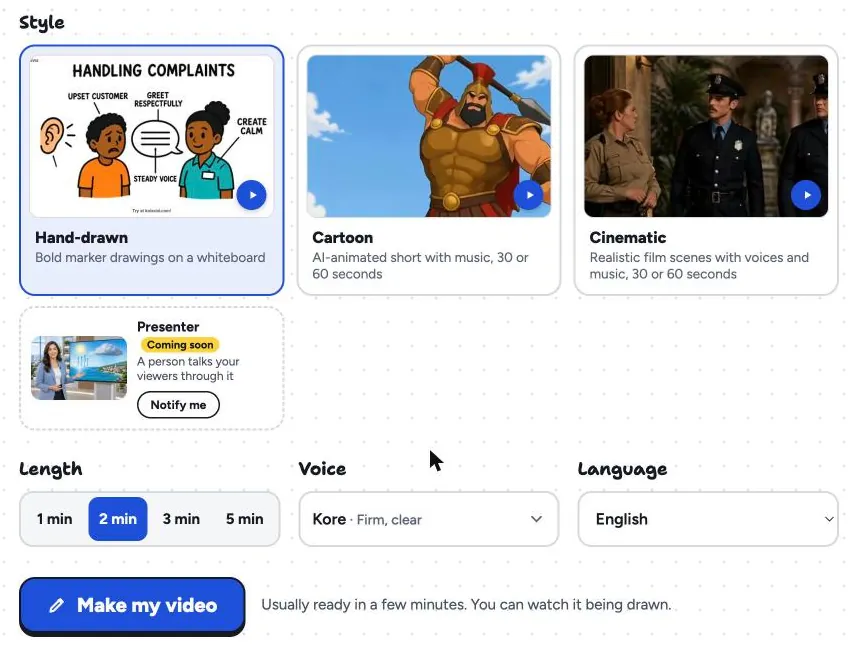
In KolaVid, paste your own outline or script, not the book's text, and add a line about the viewer: "Book summary for 15-year-old students who have not finished the novel yet. Warn about spoilers at the start. Explain each turning point with one simple picture." KolaVid makes a narrated whiteboard video, with each drawing appearing as the narrator says it and one idea on each board.
Choose the length and voice. Free videos run up to 2 minutes and paid plans up to 5, so a three-minute summary needs a paid plan. The video is usually ready in a minute or two.
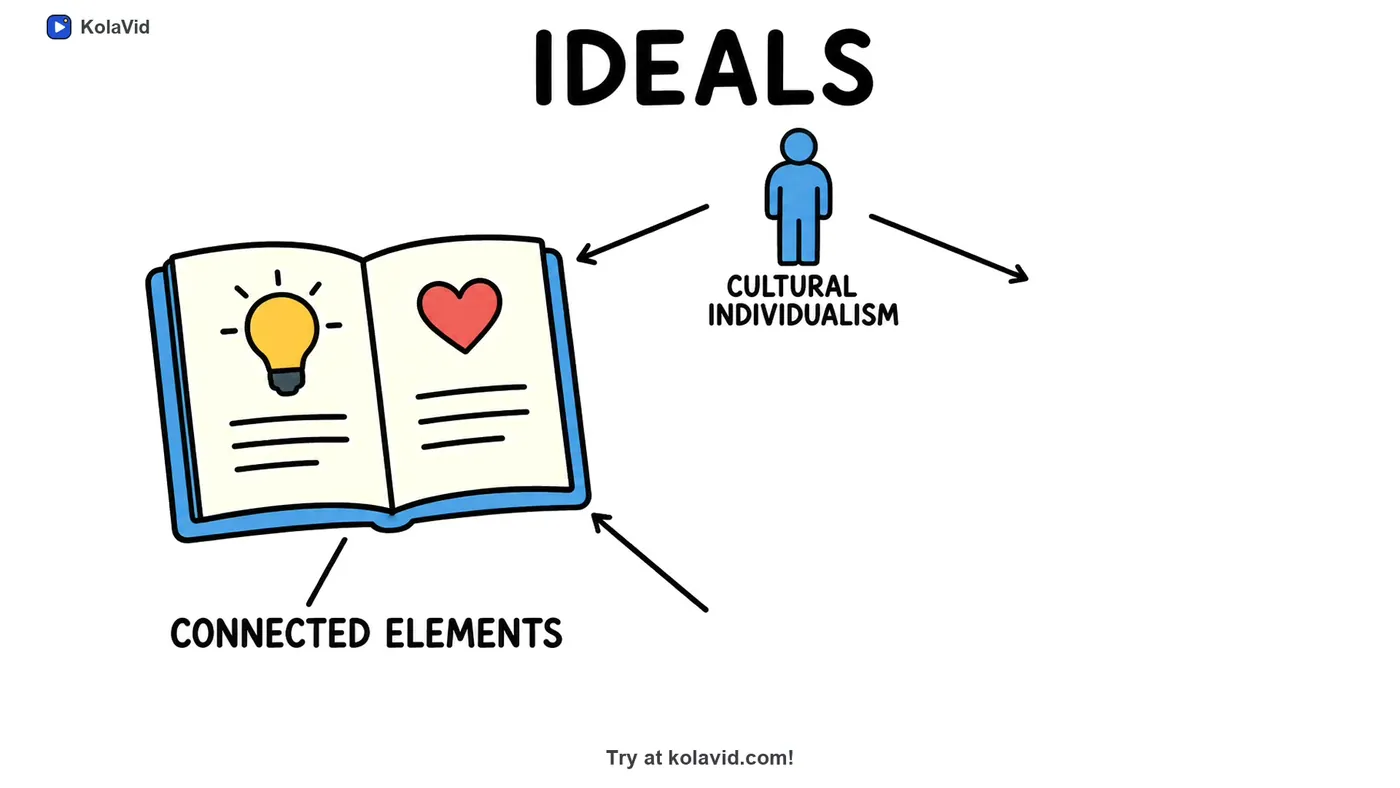
Here is a frame from a sample video summarising a written text, a research paper, which shows the kind of board a book summary produces:
Download the MP4 or share a link. Free videos carry a small KolaVid mark, and there is no editing timeline: to change a line, edit the script and make it again. The students page and teachers page have more examples.
FAQ
Is it legal to make a book summary video?
Explaining a book's ideas in your own words, with short attributed quotes, is a common and generally accepted practice, but the rules differ by country and this is not legal advice. Avoid reading out long passages, showing pages or cover art, or retelling a recent book so fully that it replaces it. Public-domain books avoid most of the question.
How long should a book summary video be?
Two to five minutes covers most books, with three to five key ideas. Longer books can become a short series, one video per part or theme.
Can I quote the book in my summary video?
Briefly, and to make a point you then discuss, naming the author and title. For public-domain books you can quote freely, but check that the edition or translation you quote from is also out of copyright.
Start with a book you know well
Pick a book you could explain over coffee, write its one-sentence summary and three turning points, and see if the outline holds up. If it does, the video is the easy part.